Author

Many scholars believe the traditional view that the apostles in fact wrote new testament books.

The traditional position. It’s what the majority of all the scholars believe for 1800 years until the falling away predicted by Paul. 2 Thess 2

It’s been the majority of the scholars positions for almost 1850 years.

Professor Bruce Metsker educated Bart Ehrman And he was a Bible believing Christian LOL

Martin Hengel, D A Carson, Craig Bloomberg, Rob Bowman, Richard Bauckman, Dr Evan, Donald Guthrie, Richard Baukham, And others like F F Bruce , Frank Thielman, Ezra Abbot, Asting, Gaugler, Grant, Harnack, Haupt, Fenton John Anthony Hort, Klijn, Johann David Michaelis, A. Robert, and André Feuillet, Sanders, Schille, Brooke Foss Westcott, and Theodor Zahn. Raymond Brown, Lee Martin McDonald and Stanley Porter accept traditional position.

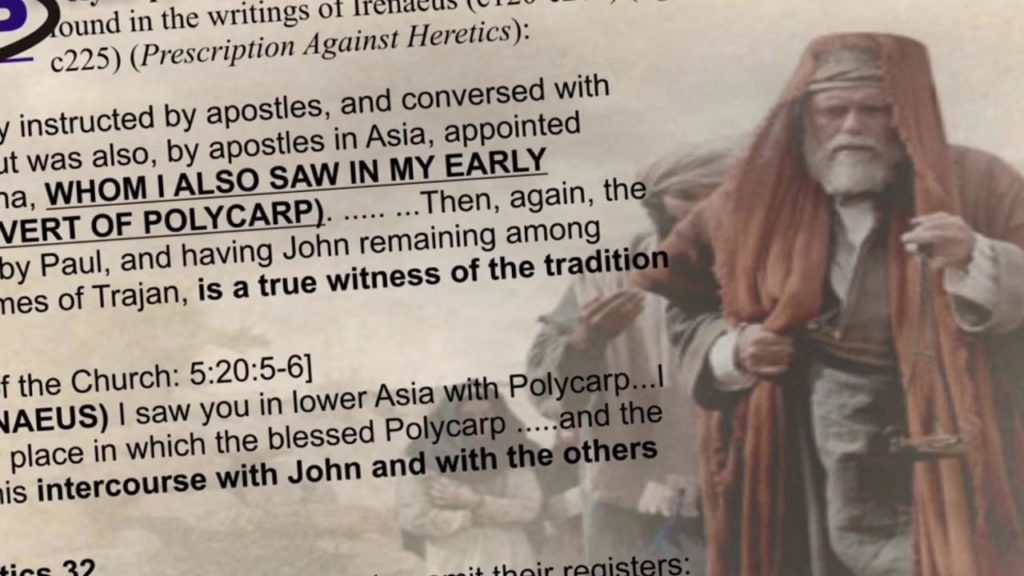
We have an eyewitness account coming from Polycarp and his own personal disciple Irenaeus. And also Papias a personal convert of the apostle John and they both tell us the apostles wrote those gospels

As a matter of fact, there are no other names mentioned for some 500 years as to who wrote the gospels other than those four apostles.

Scholar FF Bruce believed the apostles were the writers of the gospels.

He writes:

Early in the second century we find Papias, bishop of Hierapolis in Asia Minor, and Polycarp both converts of the apostle John were gathering information on this….
…. Textual Criticism, because it has to admit a much larger speculative element.
Outside Paul’s own letters, we have most of our information about him from the writings of his friend and companion Luke,
…the author of the third Gospel and the Acts of the Apostles.

Luke was a physician by profession, and according to a tradition which can be traced back to the second century was a native of Antioch in Syria. Some support is given to this tradition by the internal evidence and the external evidence.

History says:

Papias
How do we know that Mark wrote the gospel of Mark?
How do we know that Mark recorded the observations of an eyewitness?
The short answer is because Papias (< 70 – c. 155) said so. His 5 books, Papias said “ he heard the voice of John". He would have direct knowledge as to who wrote those books from John the apostle. Anything Papias says is simply corroborated by Irenaeus convert of Polycarp, convert of the apostle John. Polycarp and Irenaeus. - conversed with the apostles - Appointed Bishop of Smyrna by John. - Conversed with people that knew Jesus. Clearly the 500 - Taught the doctrines of the apostles that the church handed down that alone is true down to this present time. 180ad - Mentions Polycarp’s letter to the Philippians. - “I hope you are well versed in sacred scriptures” - Led the apostolic movement to Asia Minor. Eastern Turkey. - Corroborated by the letter to Florinus a heretic. There is zero reason not to believe the testimony of these men that were associated to the apostle John.

Discussion

9 comments

  1. Dean Furlong says:

    Hello Luke.

    I’m not sure if you’re aware of this, but Bauckham and Hengel actually identify John the Evangelist with Papias’s John the Elder, not with the Apostle John, son of Zebedee (I agree with them!).

    Raymond Brown did accept the traditional view and later moved away from it.

    I would highly recommend that you read Bauckham’s Testimony of the Beloved Disciple and Hengel’s The Johannine Question. They discuss Papias and the patristic evidence and they are standard works on the question.

  2. Luke Lefebvre says:

    These men have so much to say that it’s a world of complicated stuff that I’ve collected for five years and I think I’ve had a good grip on it. I have it all sorted if you’re interested

  3. Luke Lefebvre says:
  4. Luke Lefebvre says:

    The second problem I have with the whole thing is Ephesians chapter 5 clearly says God’s giving men to help sustain and help the church grow. If it’s not Irenaeus and these guys it can’t be the heretics in the gnostics LOL we have to defend them because those are the men and they were not Roman catholic they were like me a good old Catholic Baptist

  5. Jack Johnston says:

    This passes for Christian scholarship. Papias is a hearsay witness of hearsay witnesses. None of the synoptic gospels claim to have been written by either Matthew, Mark, or Luke. The writer of Luke admits he is at best a second hand witness and possibly 3rd and 4th hand. Matthew was obviously not written by an eyewitness seeing he copies so much from Mark. No one claims authorship of Mark and Mark gets his information second hand as he demonstrates ignorance of Palestine.

    The gospel of John is obviously late seeing it is a theological propaganda piece to turn Jesus from an apocalyptic preacher into the Son of God thus deifying him. It has absolutely no credibility especially is begins with the Greek philosophical category of the Logos. What an obvious attempt to make Jesus acceptable to a Greek audience.

  6. Dean Furlong says:

    And your comments, Jack, pass for critical scholarship. Or do they? Some of it sounds about 150 years out of date to me.

  7. Luke Lefebvre says:

    Christians can be reassured that Irenaeus the personal disciple of Polycarp convert to the apostle John tells us papias Is speaking of John the apostle. Described as an elder and it’s so silly to think that it’s a different John without realizing both these men have to be living at the same time right LOL we’re there to John’s at one time okey-dokey

  8. Dean Furlong says:

    Have you got Bauckham’s book Testimony of the Beloved Disciple? He explains why he thinks Irenaeus was speaking of John the Elder.

    One big thing for me is that there’s a lot of evidence that John the son of Zebedee was martyred early. John the Beloved Disciple = John the Elder who lived in Ephesus. He was the host of the last supper and had a big house in Jerusalem. That’s why he could receive Mary to his house the same hour. He was also known to the high priest.

  9. […] Many scholars believe the traditional view that the apostles in… […]